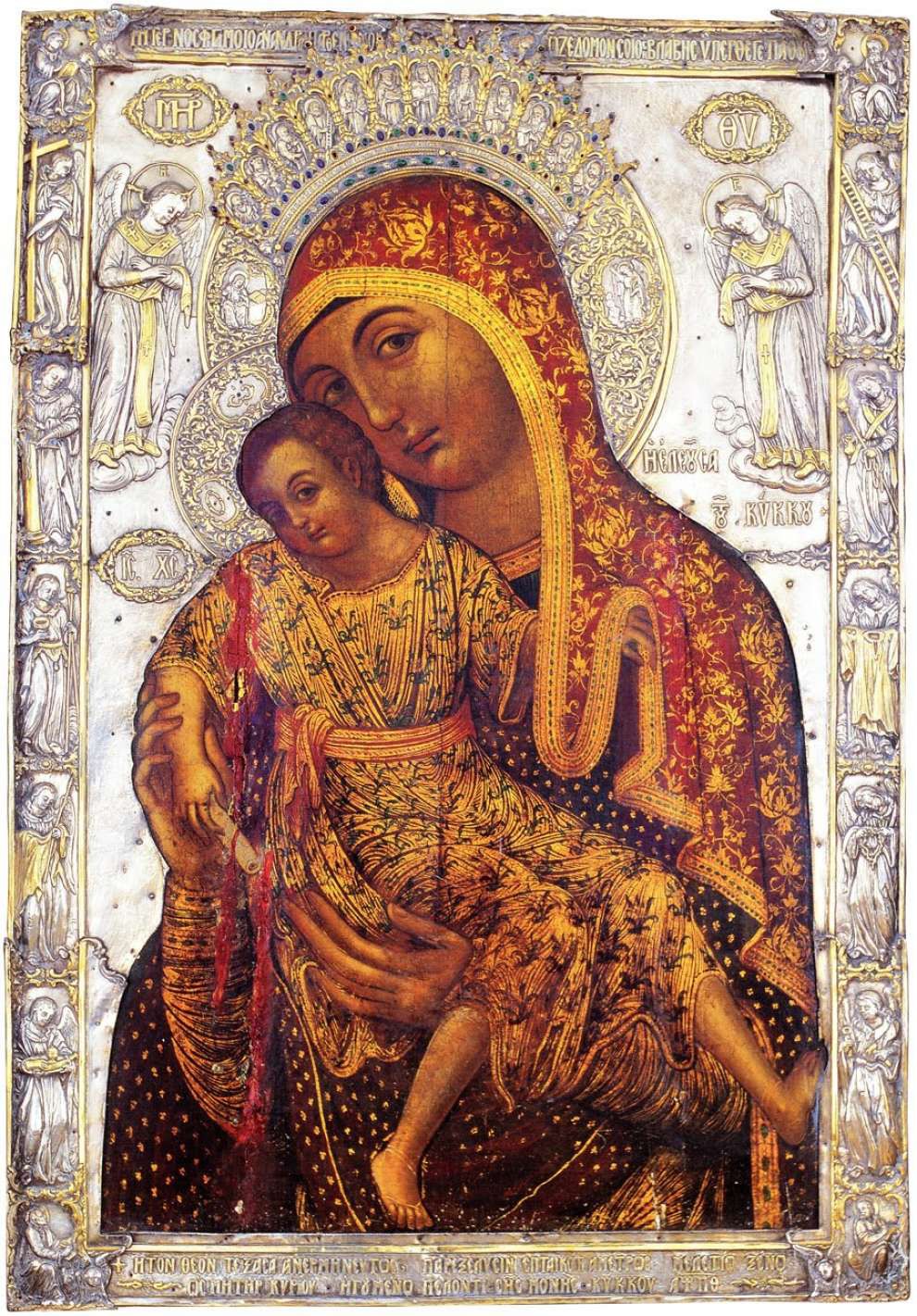
The Holy Icon of
Παναγία ἡ Κυκκώτισσα — Most Holy Mother of God of Kykkos
Written, by tradition, by the hand of the Evangelist Luke. Translated from Constantinople to the mountains of Cyprus in the year of our Lord MXCII. Veiled, for centuries, upon the throne of the Holy Royal and Stavropegic Monastery of Kykkos.
“Κύκκου, Κύκκου, Κύκκου τὸ ὄρος,
μοναστήρι θὲ νὰ γίνει,
καὶ χρυσὴ κυρὰ θὰ μπεῖ
καὶ ποτὲ νὰ μὴν ἐβγεῖ.”
I.
The Veil
«Καὶ οὐδεὶς ἠδυνήθη ἀτενίσαι.»
And no one was able to look upon it.
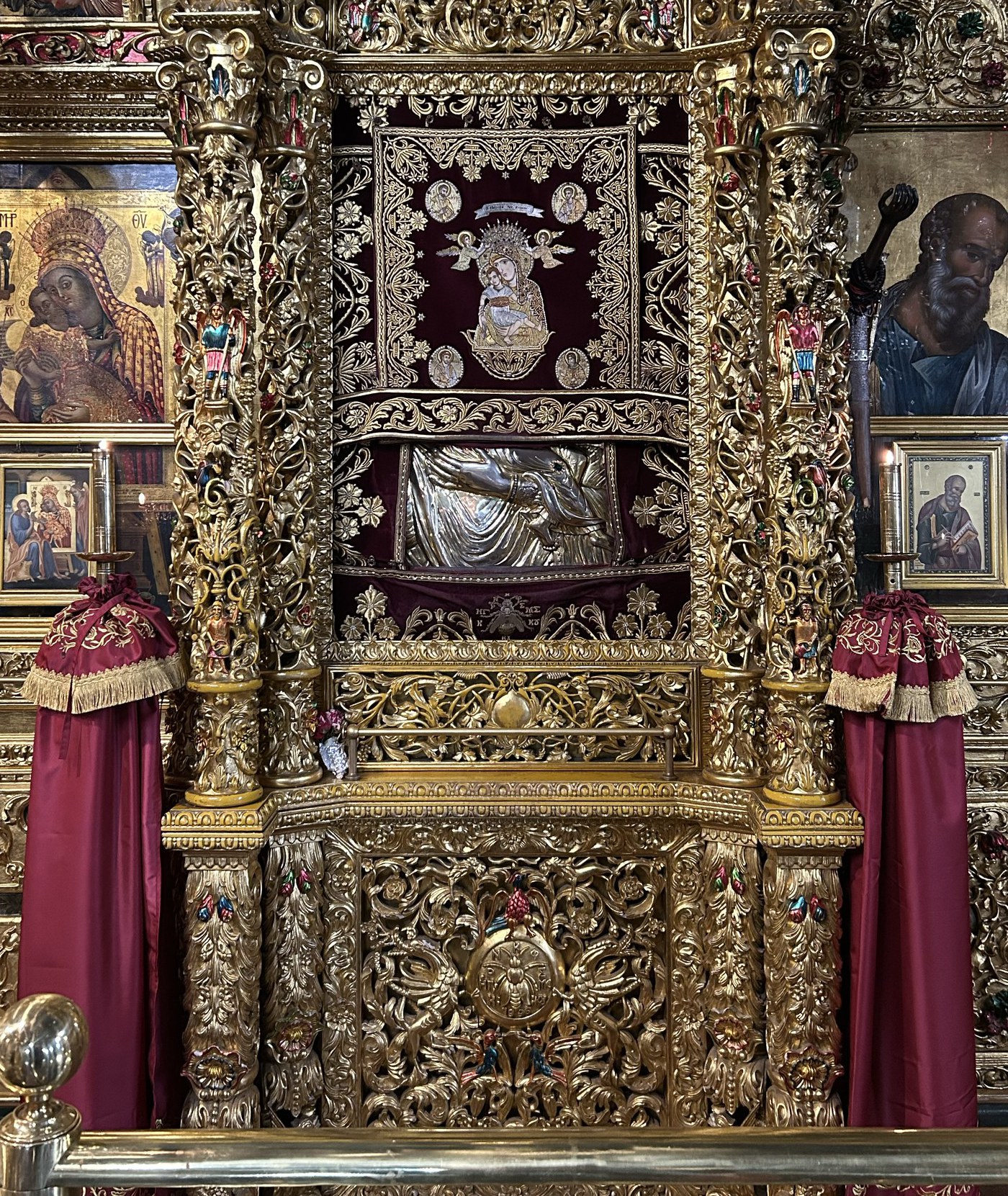
For three and a half centuries no living man has looked upon her face. The icon of Panagia Kykkotissa is veiled — not in a curtain that may be drawn aside, but in a heavy shroud of crimson and silver-gilt that descends from the upper-left corner to the lower-right, hiding the visages of Mother and Child as if it were the veil before the Holy of Holies.
The last to see her was the Pope and Patriarch of Alexandria, Gerasimos, in the year 1669. Tradition holds that he wept and asked God’s forgiveness for the daring of his glance. Since then the cover has been changed only by night, and by monks who stand behind the icon as they work — eyes turned away, lest they too should suffer the punishment that has fallen on every other who has tried.
The silver-gilt revetment was first laid over her in 1576, and renewed in 1795. Stones, pearls, votive medals, and small tokens of thanksgiving cover it like the night sky over the Troodos. What is hidden beneath, the faithful do not seek to know. Reverence here is not curiosity withheld but love consummated: ὅπου ἀγάπη, αἰδώς — where there is love, there is reverence.
“It is impossible for human tongue to describe all that has come to pass before her.”
— Seraphim of Pisidia
II.
The Hand of the Evangelist
«Ἣν Λουκᾶς ὁ θεόπνευστος ἐζωγράφησεν.»
Which Luke, inspired of God, painted.
Among the holy icons attributed to the Evangelist Luke — the first iconographer, who beheld the Theotokos in the flesh — three are remembered above all. The Kykkotissa is one of them. According to the most ancient tradition, Luke wrote her likeness onto a panel of cypress wood not long after the Dormition, while the memory of her face was still as bread newly broken.
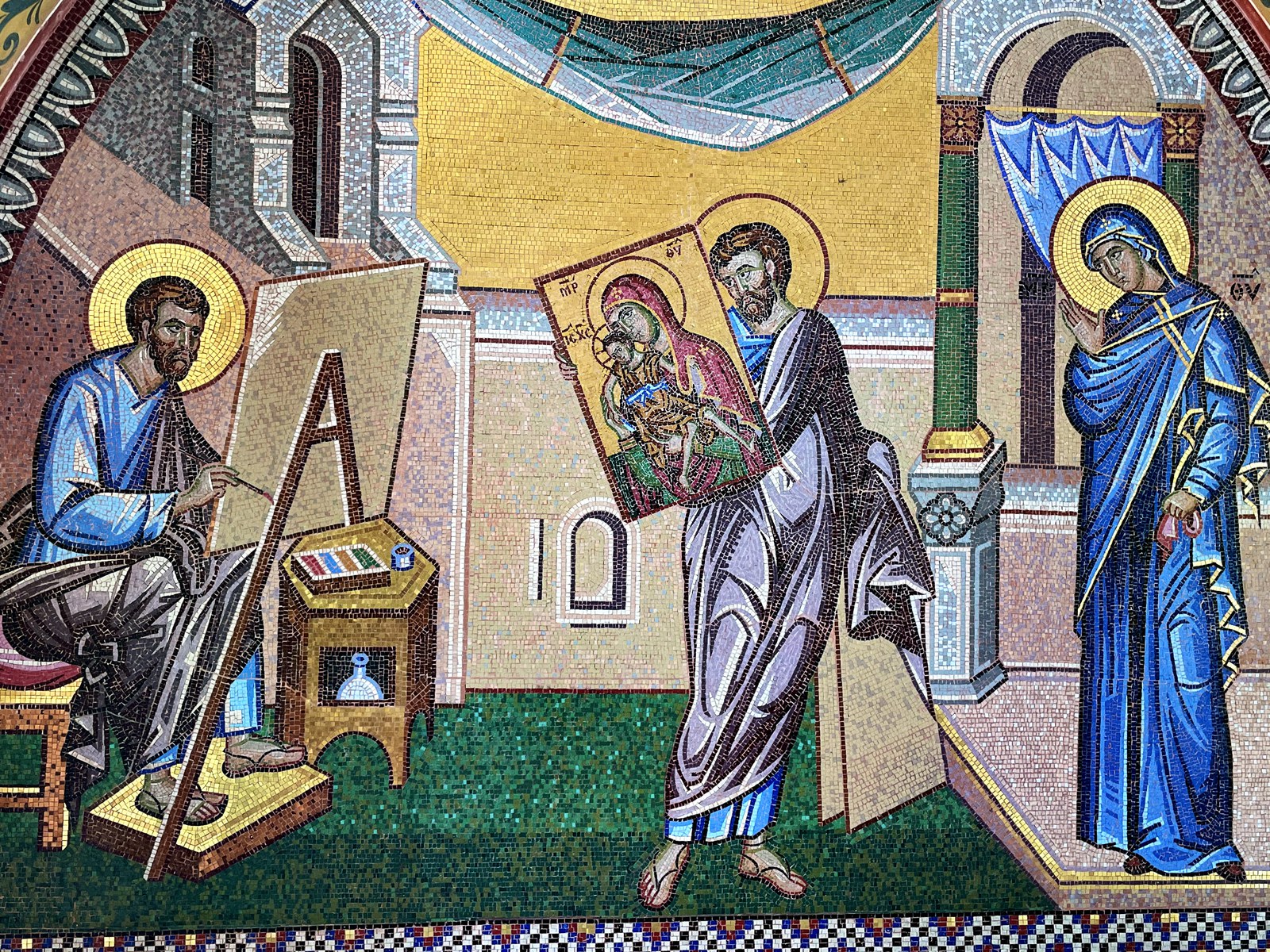
The holy Luke paints the three icons of the Mother of God, and brings the icons to the Theotokos. Mosaic in the corridor of the Holy Monastery of Kykkos.
From the Holy Land the icon was carried to Egypt, to the Christians of Alexandria, where she abided through the long centuries of trial. When the Saracens pressed upon Egypt, she was taken across the sea to Constantinople and lodged in the imperial palace of the Komnenoi — for the empire knew her, and would not give her up.
There she remained, hidden among the porphyry chambers of the Queen of Cities, until the prayer of a hermit on a mountain at the edge of the world should call her forth.
- JerusalemPainted by St. Luke, the first iconographer
- EgyptWith the Christians of Alexandria
- ConstantinopleIn the imperial palace of the Komnenoi
- CyprusTranslated to Mt. Kykkos, A.D. 1092
From the prototype on the mountain her likeness has gone out into the whole Orthodox world — into the chapels of Greece, the Russias, Georgia, Bulgaria, Egypt, and Ethiopia — until the Kykkotissa is everywhere prayed to, though the original face is hidden from all.
III.
The Hermit, the Governor, the Emperor
«Εἰ μὴ τοῦτο ποιήσῃς, ἡ θυγάτηρ σου οὐκ ἀναρρώσει.»
If you fail to do this, your daughter will not recover.
In the last years of the eleventh century there lived in a cave upon Mount Kykkos a hermit named Isaiah — Esaias — a man of unceasing prayer. He was unknown to the world, and the world was kept by him from being unknown to God.
One summer the Byzantine governor of Cyprus, the doux Manuel Boutoumites, was hunting in the Marathasa forest to escape the heat of Nicosia. Lost among the pines, he came upon Isaiah and asked the way; the elder, deep in the prayer of the heart, did not answer. The governor — a man of imperial temper — struck him.
By nightfall a strange and incurable disease, called by the physicians of that age lethargia, had fallen upon Boutoumites. He could not eat, he could not sleep, his limbs grew heavy as stones. Recognizing the hand of judgment, he went back to the mountain and begged the hermit’s forgiveness. Isaiah forgave, and prayed, and the governor was healed in the same hour.
Then Isaiah said: there is in Constantinople an icon written by the Evangelist Luke. Ask it of the Emperor for our island. Boutoumites laughed at the impossibility, but presently a courier came from the City: the Emperor’s own daughter had fallen ill of lethargia, and no medicine availed her. The governor sailed at once for the Bosphorus.
There he stood before Alexios I Komnenos, autocrat of the Romans, and spoke as Isaiah had told him: If you do not send this icon to Cyprus, your daughter will not be healed. The Emperor consented; the princess rose from her bed; and yet he could not, in the end, bear to part with so great a treasure. He commissioned a perfect copy. The Theotokos appeared to him in a dream and demanded the original. Trembling, he obeyed.
The icon went down to the harbour with imperial honour, and a golden bull was given with her, granting the new monastery the rank of stavropegic, answerable to the Patriarch alone. As Isaiah received her on the shore of Cyprus and bore her up the mountain in his arms, the pines, it is said, bowed their branches as she passed.
A.D. 1092
Translation of the icon to the mountain of Kykkos.
The first stones of the monastery are laid by the hand of Isaiah the Hermit, with the gold of the Emperor and the prayers of the people.
IV.
The Mountain Throne
«Ἱερά, Βασιλικὴ καὶ Σταυροπηγιακή.»
Holy, Royal, and Stavropegic.
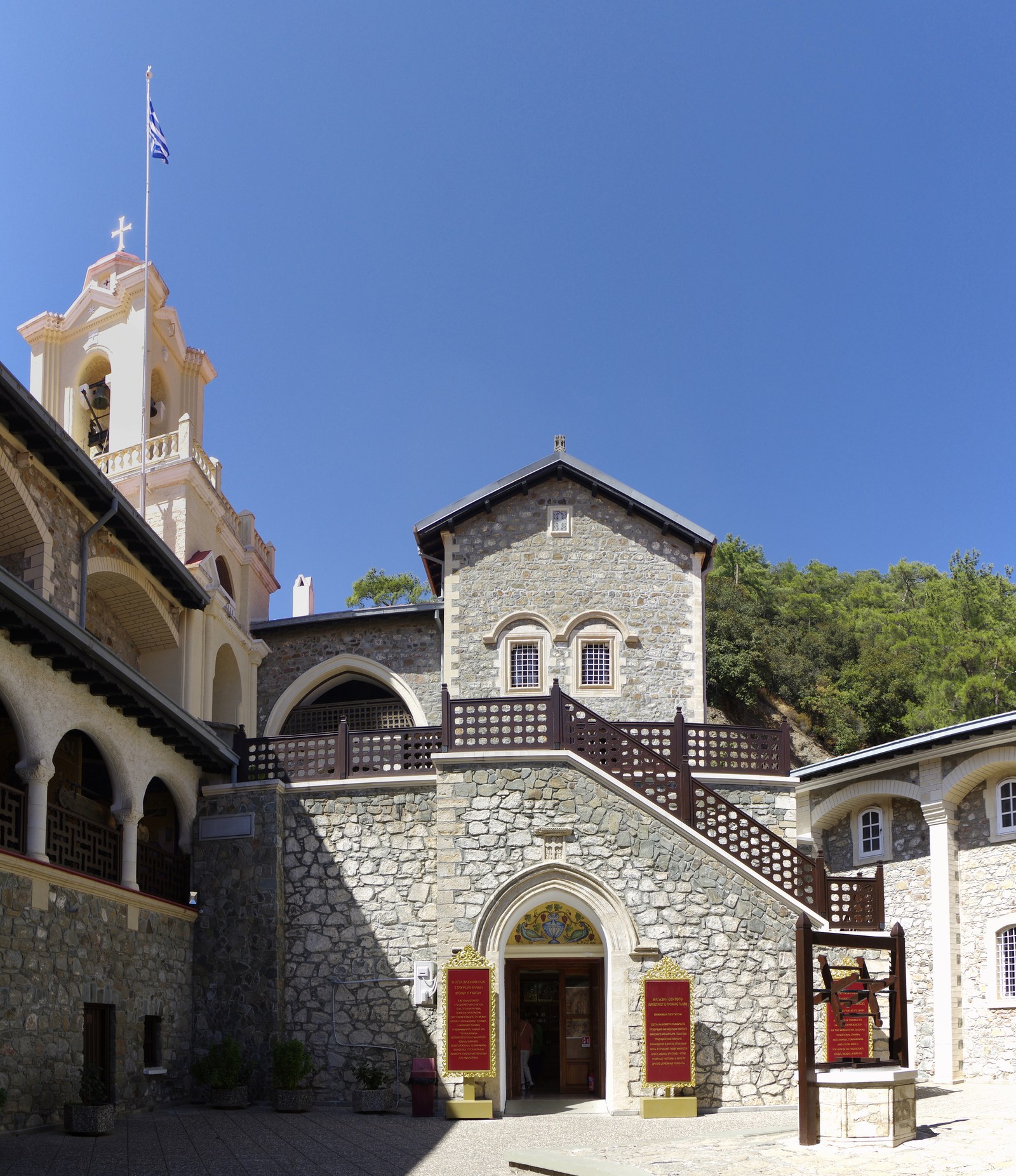
Upon the north-west face of the Troodos mountains, at one thousand three hundred and eighteen metres above the sea, the monastery rises out of the pines. It bears the full title given to it by the chrysobull of Alexios: Ἱερὰ, Βασιλικὴ καὶ Σταυροπηγιακὴ Μονὴ τῆς Παναγίας τοῦ Κύκκου — the Holy, Royal and Stavropegic Monastery of the All-Holy of Kykkos. Royal, for the imperial gold; Stavropegic, for the cross laid in the foundation, by which the house answers to the Œcumenical Patriarch alone, and to no bishop in between.
Four times the wooden cloisters have burned — in 1365, in 1541, in 1751, and in 1813 — and four times the brethren have built them again. In every age of invasion they would carry her secretly into the mountain caves and set in her place a copy made by their own hands; the original was never found. The katholikon as we now have it dates from 1745; the iconostasis from the eighteenth century, set with icons of the seventeenth. Around the courtyards run the great modern mosaics — over seventy panels in glittering Byzantine measure — and within the museum sleep some fifteen thousand printed books and a hundred manuscripts in Greek.
From the gate of the monastery a road climbs two further kilometres to the high place called Throni — the Throne — where, at fourteen hundred and fifty metres, the icon was carried in procession when the rains failed. There also lies, by his own request, the body of Archbishop Makarios III, first president of the Republic of Cyprus, who began his ecclesiastical life as a novice of this house in the year 1926. The present abbot and Metropolitan of Kykkos and Tylliria, Nikephoros, took up the bee as his own emblem when he received the omophorion — for the bee, since the founding, has been the device of the house.
- Founded
- c. 1092
- Elevation
- 1,318 m
- Status
- Stavropegic
- Library
- ~15,000 vols.
- Throni
- 1,450 m
- Patriarchate
- Constantinople
V.
Eleousa — She Who Shows Mercy
«Ἐλεοῦσα — ἡ τὸ ἔλεος δεικνῦσα.»
Eleousa — she who manifests mercy.
The Kykkotissa belongs to the iconographic family called Eleousa — Tender Mercy — wherein the Mother of God is not enthroned in distance but draws her Son close, cheek to cheek, the gold of his garments folded in the deep crimson of her maphorion. In the prototype she embraces him with her right hand, and the Christ Child — bare-footed, in motion, neither stiff nor sleeping — turns his face toward hers. There is no glass between us and that gesture.
From the Kykkotissa a whole sub-type of Marian iconography descends. Faithful copies are kept on Mount Sinai, in the Russias, in southern Italy, on the Holy Mountain. The 1668 reproduction by Simon Ushakov, painted for the Church of Saint Gregory of Neocaesarea in Moscow, hangs today in the Tretyakov Gallery — a Russian hand reaching back across nine hundred years to a panel of Cypriot cypress no man may now behold.
Kontakion · Tone Eight
Πηγὴ ἐλέους, Παναγία Δέσποινα,
σὲ γινώσκομεν Μητέρα τοῦ ἐλεοῦντος Θεοῦ·
ἀσπαζόμεθα τὴν ἁγίαν Σου εἰκόνα,
ἣν Λουκᾶς ὁ Πνευματοφόρος ἐζωγράφησεν,
δι’ ἧς ἡ Κύπρου νῆσος ὡς θησαυρὸν πεπλούτισται,
καὶ κράζομεν· χαῖρε Μῆτερ τῆς Μονῆς τοῦ Κύκκου.O Fount of Mercy, all-holy Lady,
we know thee as the Mother of the merciful God.
We kiss thy Holy Icon,
which Luke the Spirit-bearer painted —
through which the isle of Cyprus is enriched as with a treasure;
and we cry aloud: Rejoice, O Mother of the Monastery of Kykkos.
VI.
The Royal Bee
«Ἡ φιλεργὸς μέλισσα τοῦ Κύκκου.»
The diligent bee of Kykkos.
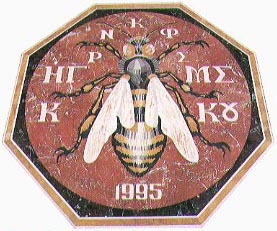
When the brethren first lifted the icon onto her throne, a single bee — so the elders tell — descended through the open door of the new church, circled three times, and rested upon her revetment. It did not sting. It did not fly away. The fathers kept it as a sign.
Since that day the bee has been the device of the Holy Monastery: the sign of unceasing labour, of work done in silence, of sweetness wrought from many small obediences; and, in the older Christian reading, the figure of the Theotokos herself — virgin in body, fruitful in grace, who bore in her chamber the sweetness of the world.
Where the imperial double-headed eagle marks the throne of kings, the golden bee marks the throne of the Lady of Kykkos. Her metropolitan bears it; her seal carries it; the lintels of her cells display it. Small, industrious, sovereign.
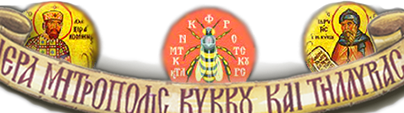
beneath the legend Ἱερὰ Μητρόπολις Κύκκου καὶ Τηλλυρίας.
VII.
Streams of Wonder
«Ποταμοὺς θαυμάτων ἀνέβλυσας.»
Thou hast made rivers of wonders to flow.
When the heavens of Cyprus shut and the earth turned to ash, the brethren would lift the icon onto a litter and carry her to Throni. They would set her there, looking out over the parched valleys, and chant the Paraklesis. Within hours, more often than not, the cloud would gather at the horizon. The peasants of Marathasa, of Pitsilia, of the Pafos hills, kept the memory of these processions as their grandfathers’ grandfathers had kept them.
In 1760, when the locust had stripped the wheat of half the island, her intercession was credited with the breaking of the plague. In 1776, when the candles for the all-night vigil were not yet lit, a spark leapt of itself from the lampada and kindled them all in an instant. Barren women conceived; the deaf began to speak; sailors caught in the great winds off Pafos were set down safely upon the strand.
And in February of 1997, before many witnesses, tears were seen upon the silver of her face, and upon the silver of the face of the Child she holds.
- 1576The icon is enclosed in silver-gilt revetment.
- 1669Patriarch Gerasimos of Alexandria — the last to look upon her face.
- 1760The locust plague is broken.
- 1776Candles ignite of themselves before the icon.
- 1795The revetment is renewed.
- 1997Tears appear upon the silver, in the sight of the people.
VIII.
To the Mountain
«Δεῦτε ἀναβῶμεν εἰς τὸ ὄρος.»
Come, let us go up to the mountain.
The monastery is approached from Nicosia, ninety-three kilometres to the east, by a road that turns at last off the highway and climbs through pine-shadow into the alpine air of the Troodos. Pilgrims are received in the courtyard. The katholikon is open from the Hours of dawn through the Vespers of evening. Modest dress is asked of all who come.
Within, the icon stands upon her throne to the left of the royal doors. The faithful approach in silence. The veil is not lifted, will not be lifted; one bows, one kisses the silver of her cover, one lights a slender beeswax taper and turns again to the light of the open doors.
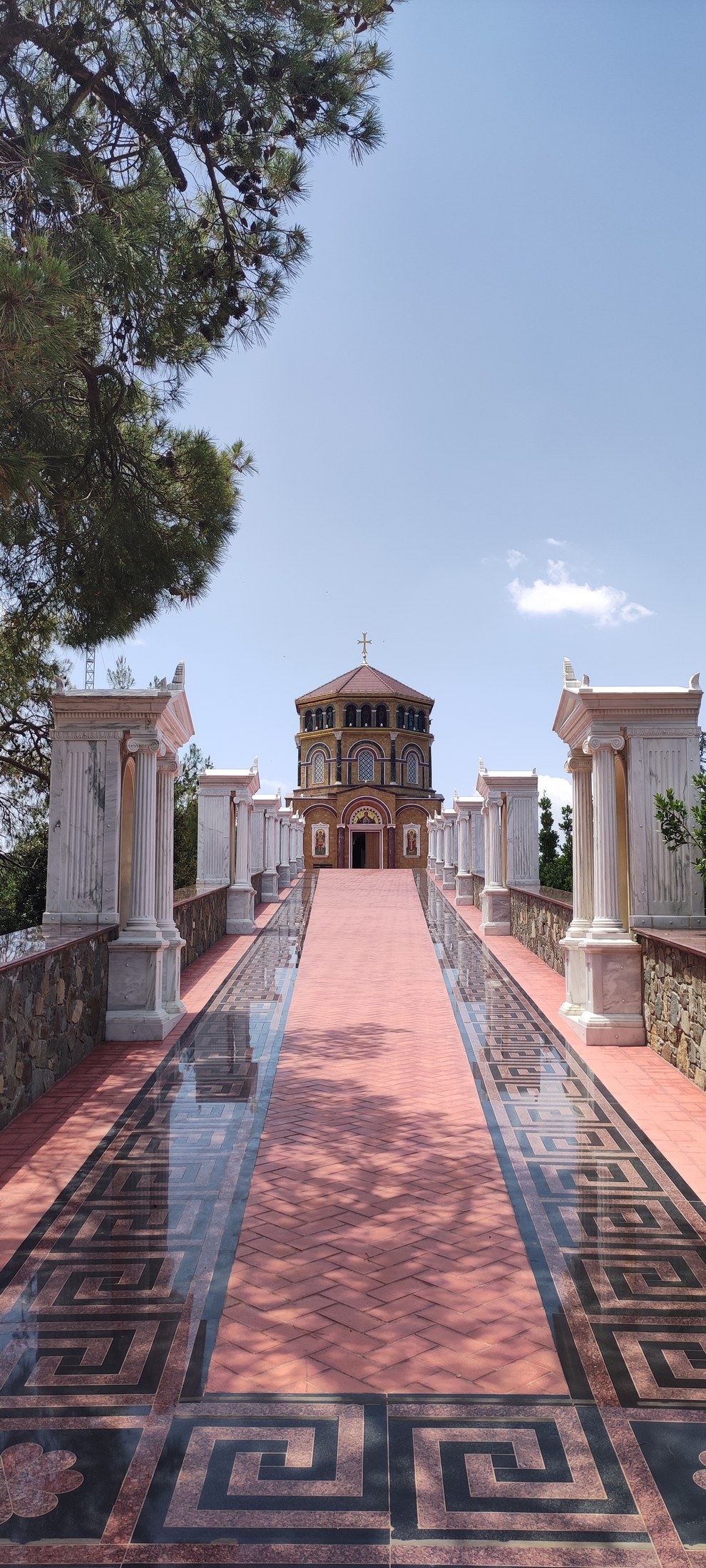
Above the monastery, two kilometres further up, the road comes at last to Θρόνι — the Throne — at fourteen hundred and fifty metres, the highest sanctuary on the mountain. There the modern chapel of Philip Loizou stands upon the place where, in centuries of drought, the icon was set under the open sky and the people prayed; there, beneath a marble slab, lies Archbishop Makarios III, who began as a novice of this house. Pilgrims approach the chapel along a colonnade of marble pillars whose floor is patterned with the ancient Greek key.
On the higher floors of the cloister live the monks of the present age, the choir of chanters founded in 1984, and the School of Byzantine Music established in 1987 by Metropolitan Nikephoros — keeping, after nine centuries, the manner of song that was sung when the icon was first set down.
- 8 SeptemberThe Nativity of the Theotokosthe chief feast of the monastery
- 15 AugustThe Dormition of the Theotokosthe great gathering of pilgrims
- 21 NovemberThe Entry into the Templethe icon is honoured at vespers
- 26 DecemberOf the All-Merciful (Kykkos)the proper commemoration of the icon
Δι’ εὐχῶν τῆς Παναγίας
ἐλέησον ἡμᾶς.
Through the prayers of the All-Holy,
have mercy upon us.